

Consistency in antibody production underpins reliable research outcomes. Whether training AI models, selecting lead candidates, or generating developability data for regulatory submissions, scientists need confidence that observed differences between variants reflect true biology rather than production artefacts.
This challenge is most pronounced at scale, where a High-Throughput antibody production service must hold conditions constant across hundreds of parallel variants. Any drift between batches directly compromises the comparability that screening decisions depend on.
Batch-to-batch variation in transient CHO expression has historically introduced noise that undermines those decisions. Modern automation has changed the equation. By removing human inconsistency from every critical process step, automated transient CHO workflows now deliver the reproducibility that demanding discovery applications require.
This is especially relevant for High-Throughput screening, where consistent conditions across large variant panels determine whether the resulting dataset is usable.
For programs that depend on this level of consistency, professional High-Throughput antibody production provides the controlled, automated environment that makes reproducible results achievable at scale.
Why Batch-to-Batch Variation Is a Strategic Risk in Antibody Discovery
Inconsistent production data does not simply add noise. It actively misleads the decisions built on top of it. Across five areas of the discovery workflow, the consequences of unreliable batch-to-batch consistency compound. Understanding the batch effects in HTP workflows helps teams identify where reproducibility breaks down.
AI Model Training and Sequence-Function Relationships
Machine learning models assume that measured differences between variants reflect true molecular properties. Technical variability from inconsistent production corrupts training data, causing models to learn process noise rather than biology. The principle is direct: if input data is unreliable, no algorithmic sophistication downstream will recover the loss.
For programs integrating AI-designed antibody discovery workflows, production consistency is not a quality nicety. It is a data prerequisite. evitria’s automated platform generates the reproducible datasets that AI-driven pipelines require.
Lead Selection Across Large High-Throughput Panels
Choosing between candidates based on expression yield, stability, or affinity requires confidence that measured differences are real. When production variability exceeds biological differences, ranking becomes unreliable. Promising candidates may be discarded while problematic ones advance.
That error does not announce itself at the screening stage. It surfaces at significant cost when an advanced candidate fails to reproduce its early profile.
Early Antibody Developability Assessment
Early-stage biophysical characterisation informs critical go/no-go decisions. If thermal stability or aggregation data varies due to production inconsistency rather than candidate properties, developability predictions become meaningless.
The entire value of early developability assessment rests on data that reflects the molecule’s intrinsic behaviour. Inconsistent production undermines that value at the source. Consistent production ensures early results are truly predictive of manufacturing success.[2]
Longitudinal Comparability Across Program Phases
Programs spanning months or years need assurance that data from early rounds remains comparable to later results. Manual workflows drift over time: reagent lots change, operators vary, protocols evolve.
Inconsistent historical data complicates candidate comparison and, eventually, regulatory documentation. Automated workflows apply fixed process parameters that hold constant across runs, preserving longitudinal comparability.
Repeat Productions and Timeline Efficiency
Unexpected results from inconsistent production require confirmation runs that waste resources and delay timelines. Consistent production reduces the need for repeat experiments. Across a multi-candidate panel, this is a compounding advantage that shortens overall time to decision.
Where Batch Variation Enters Transient CHO Production, and How Automation Controls Each Step
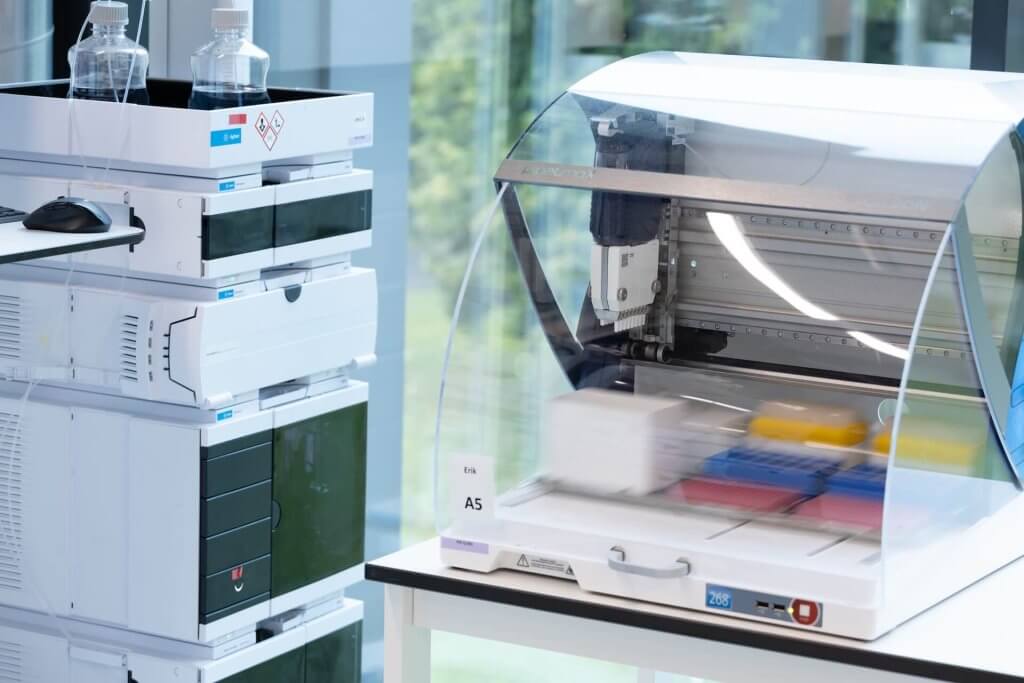
Variability in transient expression does not arise from a single source. It accumulates across four distinct process steps, each contributing independently to total noise in the dataset. In manual workflows, these sources compound. Automation addresses each one systematically.
DNA Preparation in Automated Transient Expression
Variable plasmid purity and concentration affect transient transfection efficiency. Manual quantification introduces pipetting errors that compound across large panels. Automated cloning, DNA preparation, and normalisation ensure every construct enters transfection at precisely defined quality and concentration. The starting point is identical across every run.
Robotic Transfection: Fixing the Highest-Variability Step
Small differences in DNA-to-reagent ratios, mixing sequences, timing, and cell density translate into substantial yield and quality differences, even for identical constructs. This is the step most sensitive to operator variation.
Robotic transfection forms DNA-reagent complexes under controlled conditions: fixed ratios, defined mixing, consistent timing, and accurate volumes. Process parameters are locked, not approximated.
Published work from Genentech’s early-stage cell culture team demonstrated that automated liquid handling systems, when optimised to control DNA:PEI incubation time and cell seeding density, substantially reduce variability across large high-throughput panels.[1]
Cell Culture Consistency During Expression
Temperature fluctuations, CO₂ variation, and inconsistent feeding schedules alter cell physiology. Manual handling magnifies these effects across parallel cultures. Automated incubation, feeding, and monitoring maintain consistent conditions throughout expression, removing the operator variation that accumulates across large simultaneous panels.
Purification and Harvest Timing
Variable harvest timing and manual processing contribute to differences in purity, aggregation, and recovery. Automated capture and standardised processing deliver consistent product quality with minimised lot-to-lot differences. The molecule reaching characterisation is the same molecule, run after run.
In manual workflows, these sources of variability accumulate into batch-to-batch differences indistinguishable from genuine biological variation. Automation addresses each step systematically. Observed differences between candidates then reflect true molecular properties rather than process artefacts.
Consistent Transient CHO Production at evitria: Automated from Sequence to Delivery
Batch-to-batch variation is not inevitable. It results from process variability that automation largely eliminates. Consistent antibody production enables reliable AI model training, confident lead selection, meaningful developability assessment, and valid longitudinal comparisons.
evitria’s automated transient CHO platform addresses each source of variability systematically, from DNA preparation through purification. With 15 years of exclusive focus on transient CHO expression and over 140,000 transfections performed, the recombinant antibody production service has developed depth of platform knowledge that generalised CROs cannot replicate.
CHO cells account for approximately 70% of all approved recombinant biopharmaceutical proteins, making data generated natively on CHO cells directly relevant to the downstream manufacturing context.[3]
Every production lot at evitria’s Zurich facility meets consistent quality specifications: greater than 95% purity (Protein A purification) and endotoxin levels below 1 EU/mg. Standard antibody production timelines deliver purified, analytics-confirmed material in 4 weeks from sequence to delivery. Accelerated options for known constructs run in 2.5 to 3 weeks.
Frequently Asked Questions About Batch-to-Batch Variation in Transient CHO Expression
Variability accumulates across four key steps: DNA preparation, transient transfection, cell culture, and purification.
In manual workflows, each step introduces independent variability. Differences in plasmid purity, DNA:PEI ratios, feeding schedules, and harvest timing compound across large panels into lot-to-lot differences that are difficult to distinguish from genuine biological variation between candidates.
Lead selection depends on the assumption that measured differences in yield, stability, or affinity reflect the candidates’ molecular properties. When production variability introduces noise that exceeds those biological differences, ranking becomes unreliable. Candidates may advance or be eliminated based on production artefacts rather than their true profile.
That error only becomes visible at a later and more costly development stage.
Automation removes the human inconsistency that accumulates across DNA preparation, transient transfection, cell culture, and purification. Robotic systems apply fixed process parameters: defined ratios, controlled timing, and consistent conditions reproduced identically across every run.
Manual workflows are subject to operator-to-operator variation, reagent lot changes, and protocol drift over time. Automation eliminates these as sources of variability.
Yes, when the production process is automated and controlled.
Machine learning models used in antibody discovery assume that differences between candidates reflect true molecular properties. Data generated through automated transient CHO expression supports this assumption by minimising the process noise that would otherwise corrupt training datasets.
The quality of model predictions depends directly on the consistency of the production data used to train them.
evitria’s High-Throughput (HTP) service is designed for parallel processing of large panels under identical automated conditions. Each construct is produced through the same workflow with the same controlled parameters, ensuring that inter-candidate comparisons reflect molecular differences rather than process variation.
Panel size can be discussed directly with the evitria team based on project requirements.
Automated transient CHO expression is well-suited to developability screening. Early-stage biophysical characterisation, including differential scanning fluorimetry, dynamic light scattering, and size-exclusion chromatography, requires material that accurately represents each candidate’s intrinsic properties.
Consistent production ensures that thermal stability, aggregation, and solubility data reflect the molecule rather than production artefacts.
50 to 500 µg per variant is generally sufficient for a core characterisation panel.
Every production lot at evitria’s Zurich facility meets consistent quality specifications: greater than 95% purity (Protein A purification) and endotoxin levels below 1 EU/mg. Standard timelines deliver purified, analytics-confirmed material in 4 weeks from sequence to delivery. Documentation is provided with every lot.
Sources
- Bos AB., Duque JN., Bhakta S., Farahi F., Chirdon LA., Junutula JR., Harms PD., Wong AW. (2014). Development of a semi-automated high throughput transient transfection system. J Biotechnol, 180, 10–16. PubMed 24704608
- Jain T., Sun T., Durand S., et al. (2017). Biophysical properties of the clinical-stage antibody landscape. Proc Natl Acad Sci USA, 114(5), 944–949. PubMed 28096333
- Wurm FM. (2004). Production of recombinant protein therapeutics in cultivated mammalian cells. Nat Biotechnol, 22(11), 1393–1398. PubMed 15529164