

The success of a therapeutic pipeline is often decided in the first few weeks of candidate screening. High-Throughput (HTP) antibody production serves as the primary engine for this exploration allowing researchers to transition from digital sequence-libraries to physical proteins with unprecedented efficiency.
By prioritizing high-fidelity data early on, biotechnology organizations can significantly increase their chances of identifying candidates with superior developability profiles.[1] A structured High-Throughput antibody production service is what makes this early, data-rich screening possible at scale.
Why Early HTP Matters
Traditional antibody production is often too slow and too limited in number of parallel expressions to keep up with modern discovery timelines. Without HTP screening options, researchers are forced to make very important decisions based on only a few samples. This lack of data increases the risk of selecting a lead that may eventually fail during expensive late-stage manufacturing trials. Once the decision for HTP is made, designing an HTP screening campaign that ensures lead comparability across all variants is the logical next step.
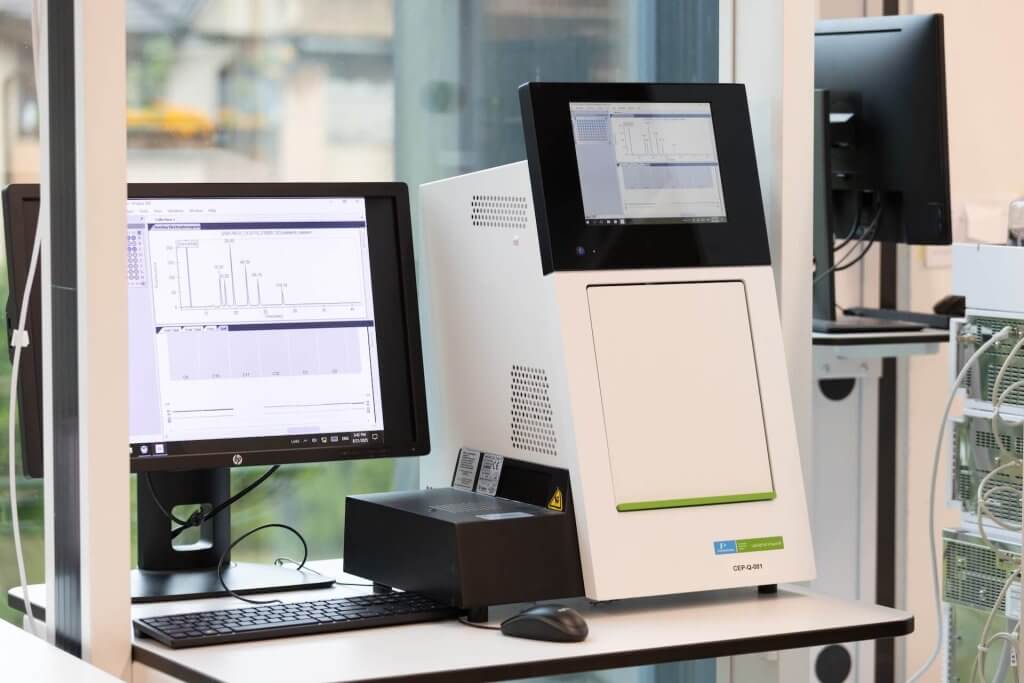
One of the most significant advantages of this approach is speed to data. When you can reliably predict the Turnaround Time for HTP antibody production, your discovery pipeline maintains its momentum from sequence submission straight through to screening.
evitria’s High-Throughput Antibody Production Service changes this paradigm by allowing teams to test hundreds of variants simultaneously. This is not just about raw speed but about making better, data-driven decisions. By evaluating (several) hundred leads instead of just ten, you dramatically reduce the probability of encountering preventable setbacks during scale-up.
Accelerating the Discovery-Timeline with Robotic Precision
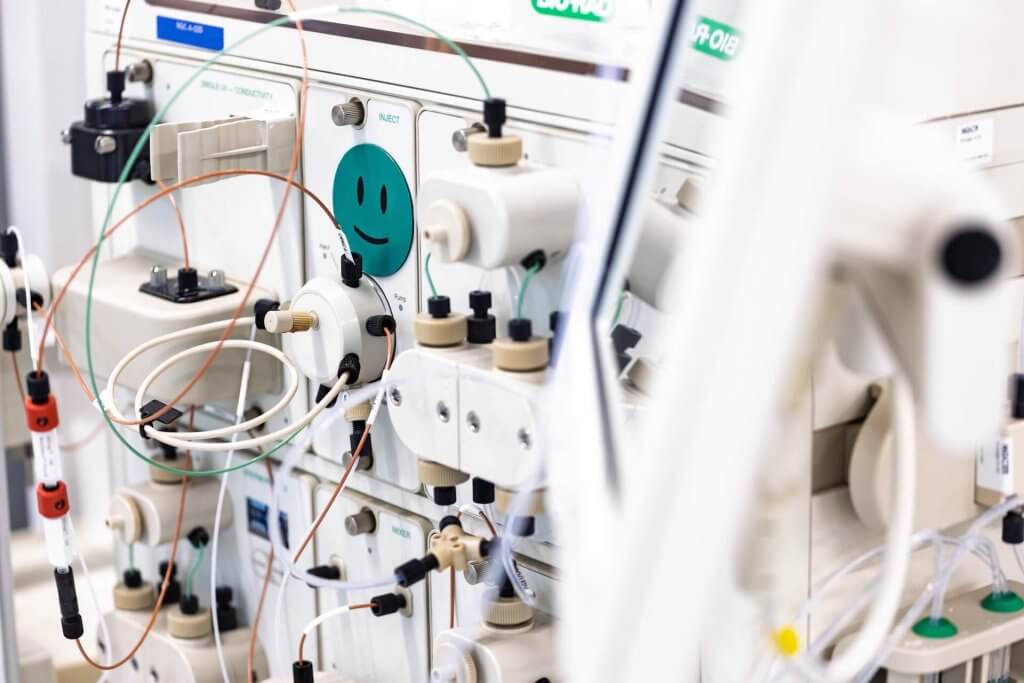
Speed in discovery is often viewed as a trade-off against data quality, but evitria’s HTP approach bridges this gap by utilizing precision robotics. An automated workflow eliminates the technical bottlenecks that typically slow down traditional production methods. Standardized robotic execution ensures that every measured variation is based exclusively on the molecular sequence rather than human error.
- Massive Parallel Processing: Modern robotics handle hundreds of transfections simultaneously to ensure every sequence is evaluated under identical conditions.
- Immediate Project Initiation: Work begins within 24 hours of receipt at our Zurich facility to prevent any delays in your timeline.
- Standardized Success Rates: Automated liquid handling reduces technical variability and ensures every construct is expressed with Swiss precision.
- Rapid Hit Identification: Moving quickly to primary screening allows researchers to fail fast and focus resources on the most promising molecules.
Maximizing Sequence-Diversity and Lead-Quality
The ultimate goal of early discovery is not just to find any binder but to find the best possible binder that can survive the journey to the clinic. High-throughput expression empowers scientists to explore a significantly larger sequence landscape through advanced mammalian cell-culture. This breadth is essential for identifying the rare candidates that combine high affinity with excellent manufacturability.
Avoiding the Translation-Trap through CHO-Native Expression
A critical benefit of the evitria platform is the exclusive use of Chinese-Hamster-Ovary (CHO) cells from the very first screening run. Using the industry-standard host from day one ensures that your early characterization data remains valid throughout the entire development lifecycle.
- Predictive Manufacturability: Using CHO-native material for HTP-screening ensures that generated data is a true reflection of how the monoclonal antibody will behave during large-scale production.[2]
- Consistent Glycosylation: Screening in the industry-standard host provides consistent post-translational modifications and folding machineries.[3]
- AI Training Integrity: High-fidelity HTP provides the clean training sets required for machine-learning in drug discovery to accurately predict antibody behavior.
- De-risking the Pipeline: Identifying developability issues during the HTP-phase prevents costly failures during late-stage preclinical development.[4]
A major advantage of an optimized High-Throughput platform is the ability to move directly from discovery into preclinical production without repeating validation steps. However, scalability is only seamless if the biological properties of the molecule remain constant. Evaluating HEK293 vs CHO for HTP expression demonstrates that using manufacturing-relevant cells from day one is the only way to ensure folding fidelity.
Traditional vs. High-Throughput Expression
| Feature | Traditional Expression | evitria Specialized HTP |
|---|---|---|
| Sequence Capacity | Limited to dozens of variants | Optimized for \~100 high-fidelity leads |
| Host System | Various | Exclusively CHO-native |
| Data Integrity | High process-variability | Robotic Swiss precision |
| Lead Selection | Based primarily on binding | Based on predictive manufacturability |
| Project Start | Significant lead-times | Initiation within 24 hours |
Your Scientific Co-Pilot: The evitria Standard
Success in modern drug discovery requires a partner who understands that speed is worthless without reliability. evitria provides the HTP infrastructure required to transform digital sequences into a de-risked therapeutic pipeline.
By utilizing a CHO-native environment we ensure your early-stage results serve as a stable foundation for manufacturing success and comprehensive preclinical de-risking.
Frequently Asked Questions
HTP-workflows allow for the parallel expression of hunderds of variants simultaneously which eliminates the bottlenecks found in traditional methods. This rapid turnaround ensures that primary screening results are available in a fraction of the usual time to maintain a competitive advantage.
Using CHO-native systems from day one ensures that your screening data is predictive of future large-scale manufacturing. This avoids the “translation-trap” where candidates appear stable in surrogate hosts but fail during industrial scale-up.
High-throughput production is ideal for rapid library screening of standard antibody formats, such as monoclonal antibodies. For complex bispecific antibodies, we recommend our specialized workflows designed for high‑fidelity assembly, ensuring optimal chain‑ratio control and preservation of structural integrity in challenging constructs. That said, we remain flexible and can tailor our approach to support the parallel expression of large libraries of complex molecules as required.
Our professional [recombinant antibody expression](https://www.evitria.com/recombinant-antibody-expression-service/) leverages precision robotics to eliminate human-induced batch-effects. This creates high-fidelity data with a superior signal-to-noise ratio which provides the robust biological validation required for grant applications and funding rounds.
We utilize standardized robotic execution and Swiss-quality QC processes to ensure that every transfection is performed under identical conditions. This level of process-control guarantees that the biological behaviour of a candidate remains consistent across multiple campaigns.
Sources
[1] Long, Z., Wei, C., Zhan, Z., Li, X., Li, Y., Ma, X., Li, C., Wang, L., & Huang, T. (2020). The effects of manufacture processes on post-translational modifications of bioactive proteins in pertussis vaccine. Journal of pharmaceutical and biomedical analysis, 190, 113536\. https://doi.org/10.1016/j.jpba.2020.113536
[2] Fernández-Quintero, M. L., Ljungars, A., Waibl, F., Greiff, V., Andersen, J. T., Gjølberg, T. T., Jenkins, T. P., Voldborg, B. G., Grav, L. M., Kumar, S., Georges, G., Kettenberger, H., Liedl, K. R., Tessier, P. M., McCafferty, J., & Laustsen, A. H. (2023). Assessing developability early in the discovery process for novel biologics. mAbs, 15(1), 2171248\. https://doi.org/10.1080/19420862.2023.2171248
[3] Yang, C. H., Li, H. C., & Lo, S. Y. (2024). Enhancing recombinant antibody yield in Chinese hamster ovary cells. Tzu chi medical journal, 36(3), 240–250. https://doi.org/10.4103/tcmj.tcmj\_315\_23
[4] Zhang, W., Wang, H., Feng, N., Li, Y., Gu, J., & Wang, Z. (2022). Developability assessment at early-stage discovery to enable development of antibody-derived therapeutics. Antibody therapeutics, 6(1), 13–29. https://doi.org/10.1093/abt/tbac029