

Identifying a high-affinity binder is necessary but not sufficient for successful antibody development. The majority of late-stage failures are attributable not to lack of efficacy, but to manufacturability and formulation liabilities that were not assessed early enough.
A developability-by-design framework—integrating biophysical characterization into candidate ranking before lead selection—addresses this directly, enabling data-driven decisions at the stage where alternatives are still available and course correction is least costly. A structured High-Throughput antibody production service generates the parallel, consistent material this kind of ranking depends on.
Beyond Affinity: The Case for Multiparametric Lead Ranking
Binding kinetics provide no information about a molecule’s physical behavior during manufacturing, formulation, or in vivo. Candidates selected on affinity alone frequently encounter aggregation, poor expression, or unfavorable pharmacokinetics later in development—a pattern sometimes termed the “translation trap.” Robust lead ranking requires evaluation of conformational and colloidal stability, expression efficiency, and interaction behavior in parallel with binding data. Five standardized readouts provide the core of this assessment. [1]
Which readouts to include and how to standardize them across the panel are decisions made during HTP screening campaign design, before samples are processed.

Biophysical readouts require highly uniform sample preparation to yield actionable data. Failing to account for systematic batch effects in HTP antibody production can introduce structural artifacts that corrupt your stability and aggregation rankings.
The 5 Critical Readouts for High-Fidelity Lead Ranking
To establish a definitive rank order researchers should evaluate every candidate against five standardized metrics. This multi-dimensional approach ensures that the chosen lead is not just a potent binder but a developable drug. At evitria we provide these high-fidelity readouts to help separate laboratory hits from clinical winners.
1. Expression Yield and Titer
Expression yield in the production host is an early indicator of structural integrity. Low titers frequently reflect folding bottlenecks or assembly inefficiencies that will be amplified at manufacturing scale. Evaluating yield in CHO cells from the first transfection ensures that expression data is directly relevant to the intended manufacturing context.
2. Thermal Stability
The melting temperature (Tm), determined by nano-DSF or differential scanning calorimetry (DSC), is the primary readout for conformational robustness. Candidates with low Tm values are at elevated risk of unfolding, aggregation, and degradation during processing and storage. Mapping full unfolding transitions—including onset temperature and domain-specific melting events—provides a more complete picture of stability than Tm alone and allows correlation with long-term storage behavior.
3. Aggregation Propensity
Aggregation is the most prevalent failure mode in biologics development, with consequences including reduced yield, process complications, and immunogenicity risk. Monomer content and aggregation onset temperature (T_agg) are quantified by SEC-HPLC, dynamic light scattering (DLS), and static light scattering (SLS). Ranking candidates by aggregation propensity at this stage filters out high-risk leads before they consume resources in downstream development.
4. Solubility and Colloidal Stability
For candidates intended for high-concentration formulations—particularly subcutaneous administration—colloidal stability is a critical developability parameter. DLS and SLS measurements assess concentration-dependent behavior, identifying candidates prone to self-crowding, viscosity increases, or precipitation. These properties are difficult and expensive to engineer out at later stages, making early identification essential.
5. Self-Association and Polyspecificity
Non-specific binding and self-association are predictive of in vivo clearance rates, off-target interactions, and potential toxicity. Techniques such as affinity-capture self-interaction nanoparticle spectroscopy (AC-SINS) and polyspecificity assays quantify these interactions during lead ranking. Candidates with clean interaction profiles are more likely to achieve favorable pharmacokinetics and a wider therapeutic index in the clinic.
Data-Driven Ranking: Turning Metrics into Decisions
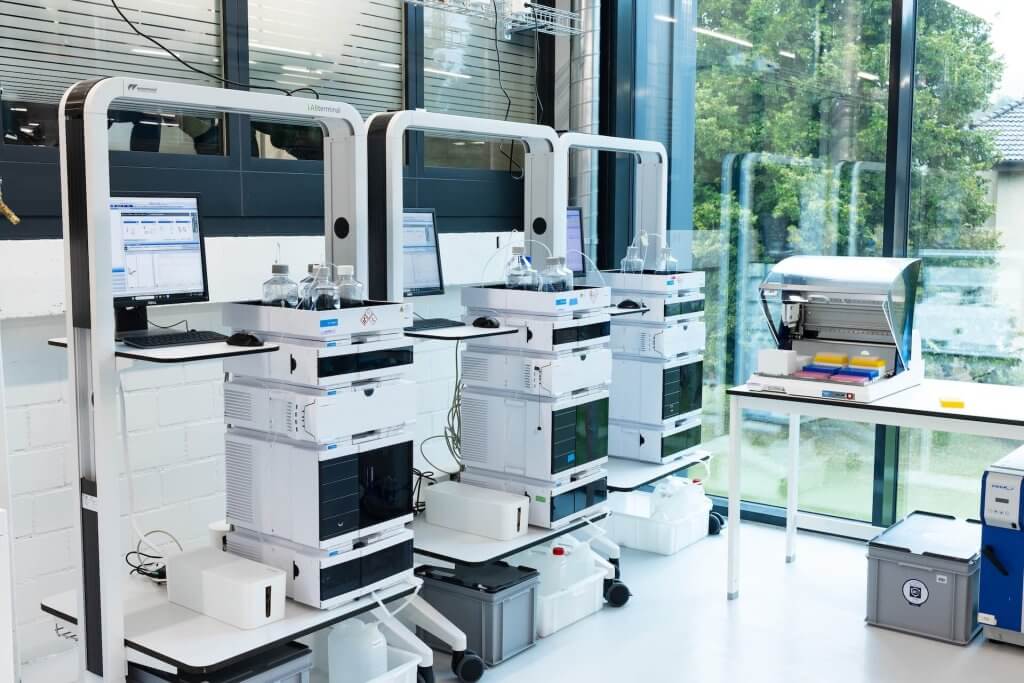
The value of multiparametric assessment lies in its ability to generate a weighted, evidence-based rank order across the candidate panel. Assigning risk flags to suboptimal biophysical traits—rather than relying on single-parameter selection—identifies molecules with the highest probability of advancing successfully. This approach eliminates false positives that combine high affinity with poor physicochemical properties, and builds a structured dataset that supports both internal go/no-go decisions and, where applicable, the training and refinement of computational prediction models.[2]
Why Early CHO-Native Ranking De-risks Antibody Development
Two arguments make the case for ranking candidates early and in the manufacturing-relevant host: one economic, one technical. Together they explain why developability-by-design pays off before lead selection, not after.
Why Early Developability Assessment De-risks the Pipeline
Finding liabilities at the ranking stage, rather than after lead selection, is the core economic argument for developability-by-design. The earlier a high-risk candidate is flagged through early antibody developability assessment, the less downstream investment is wasted on a molecule that will not survive manufacturing or formulation.

To successfully implement developability screening without creating operational bottlenecks, production and analytics must move in lockstep. Knowing the exact turnaround time for HTP antibody production ensures you can plan these advanced biophysical readouts right when the material becomes available.
Why CHO-Native Ranking Reflects Manufacturing Reality
Ranking candidates in a surrogate host such as HEK293 risks the translation trap: the chosen lead may behave differently once it reaches the CHO manufacturing host. The HEK293 vs CHO in HTP comparison explains why glycosylation and folding differences between hosts can change stability and aggregation behavior at the host switch.
Your Strategic Intelligence Partner
At evitria, we function as more than a production vendor because we serve as your analytical co-pilot in the lead-ranking process. Our Zurich-based facility provides the decision-grade data required to move confidently toward preclinical validation.
By utilizing a 100% CHO-native platform since 2010 we ensure that every readout is relevant to your final manufacturing destination. We combine Swiss robotic precision with specialized expertise to de-risk your pipeline.
Behind every ranking project is a controlled production engine. Our HTP antibody production runs all candidates through one standardized CHO workflow, so the five readouts compare molecules rather than process conditions. The full method is described in our complete guide.
Frequently Asked Questions
Thermal stability is a direct indicator of conformational robustness where a high melting point suggests a molecule is less prone to unfolding and subsequent aggregation during storage and processing.
Yes because if the molecule has high aggregation propensity or significant chemical liabilities the risks of immunogenicity and manufacturing failure may outweigh its binding potency.
Sticky antibodies often bind to off-target tissues or proteins which leads to toxicity and rapid clearance by the liver and a shortened half-life that necessitates more frequent dosing.
HEK293 and CHO cells have different glycosylation and folding machinery so ranking leads in a surrogate host creates a translation trap where the chosen candidate may behave differently in the final manufacturing host.
Modern high-throughput platforms can typically analyse these five critical readouts using less than one milligram of purified material which makes it feasible to rank hundreds of candidates early in discovery.
Sources
- [1] Jain, T., Sun, T., Durand, S., Hall, A., Houston, N. R., Nett, J. H., Sharkey, B., Bobrowicz, B., Caffry, I., Yu, Y., Cao, Y., Lynaugh, H., Brown, M., Baruah, H., Gray, L. T., Krauland, E. M., Xu, Y., Vásquez, M. & Wittrup, K. D. (2017b). Biophysical properties of the clinical-stage antibody landscape. Proceedings Of The National Academy Of Sciences, 114(5), 944–949. [https://doi.org/10.1073/pnas.1616408114](https://doi.org/10.1073/pnas.1616408114)
- [2] Raybould, M. I. J., Marks, C., Krawczyk, K., Taddese, B., Nowak, J., Lewis, A. P., Bujotzek, A., Shi, J. & Deane, C. M. (2019b). Five computational developability guidelines for therapeutic antibody profiling. Proceedings Of The National Academy Of Sciences, 116(10), 4025–4030. [https://doi.org/10.1073/pnas.1810576116](https://doi.org/10.1073/pnas.1810576116)