eviSIMILARs – Recombinant Antibody Analogs For Therapeutic R&D
eviSIMILAR products are recombinant antibody analogs for therapeutic R&D. They support assay development, analytical characterization and preclinical research with reference materials corresponding to established therapeutic antibodies.
The eviSIMILAR Portfolio
Available reference antibodies include cetuximab, ipilimumab, pertuzumab, rituximab, trastuzumab, bevacizumab, adalimumab, alemtuzumab, panitumumab, eculizumab, omalizumab and muromonab (anti-CD3, OKT3; the originator product is no longer marketed but the sequence remains a standard research tool).
Note that these molecules differ substantially in format and Fc biology. Cetuximab is a chimeric IgG1, alemtuzumab and trastuzumab are humanized IgG1, panitumumab is a human IgG2, eculizumab carries a hybrid IgG2/IgG4 constant region designed to minimise effector function, and muromonab is murine IgG2a. Select on the basis of the isotype and Fc properties your assay requires, not target alone.
CHO
Expression System
Protein A
Purification
1mg – 50mg
Pack Sizes
< 1EU/mg
Endotoxin
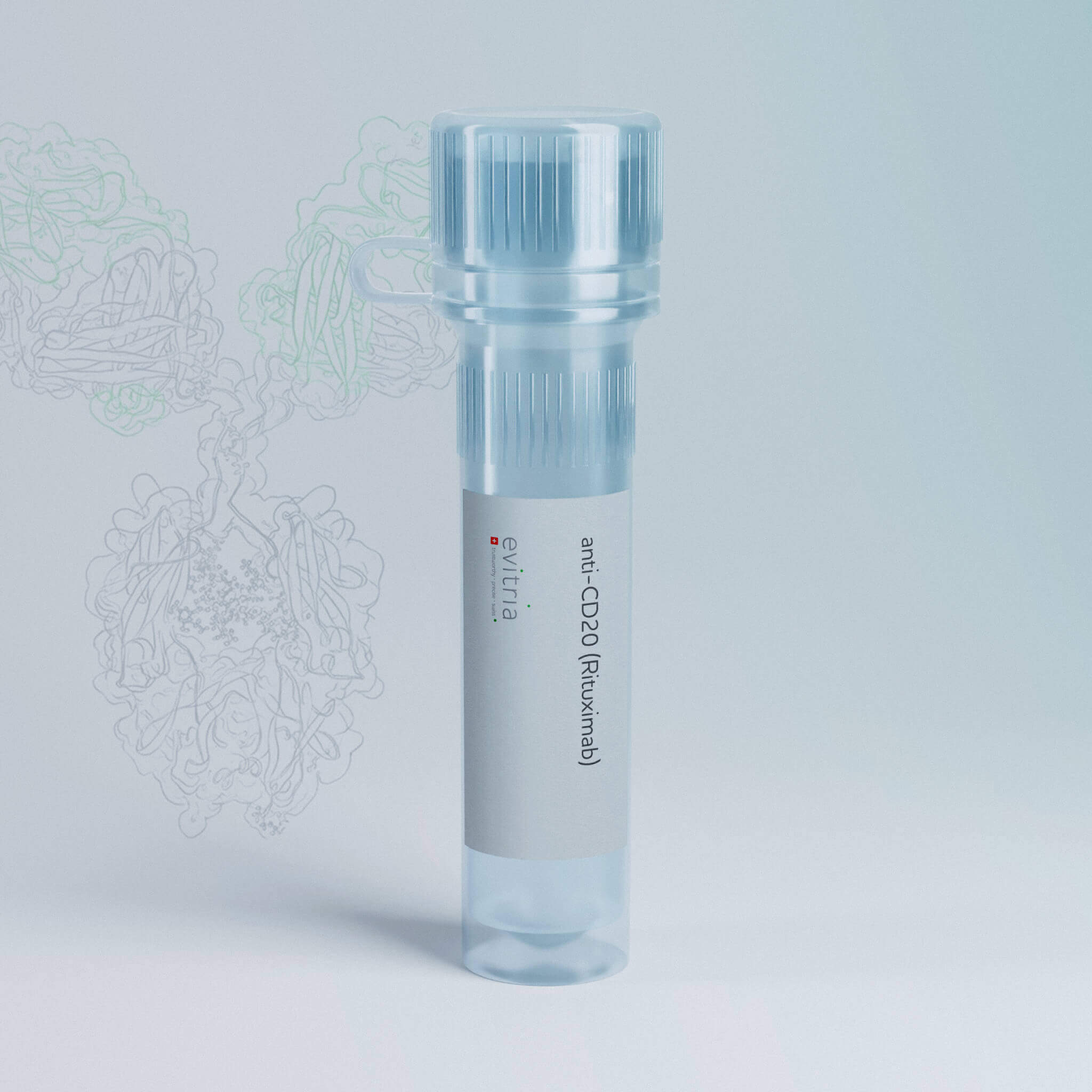
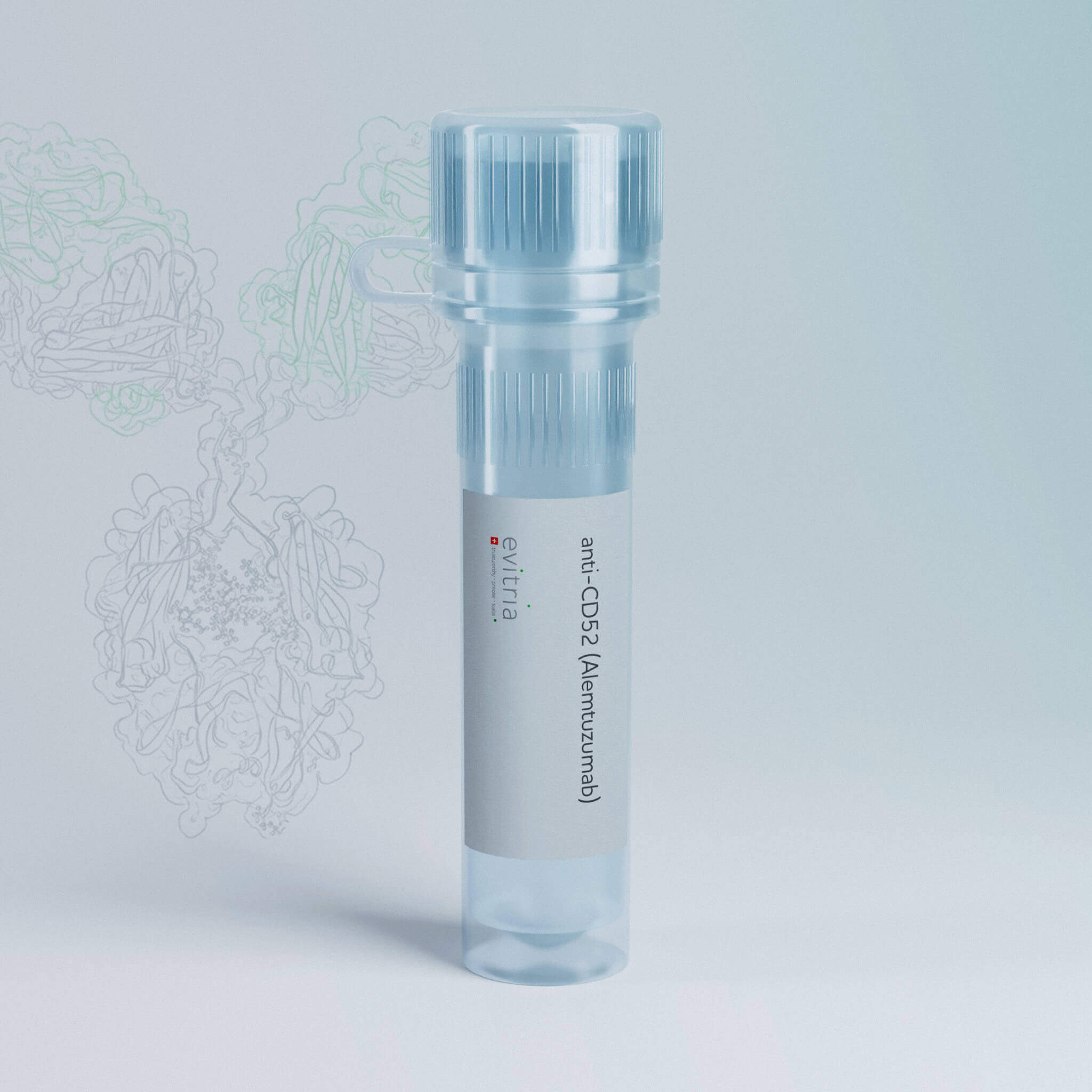
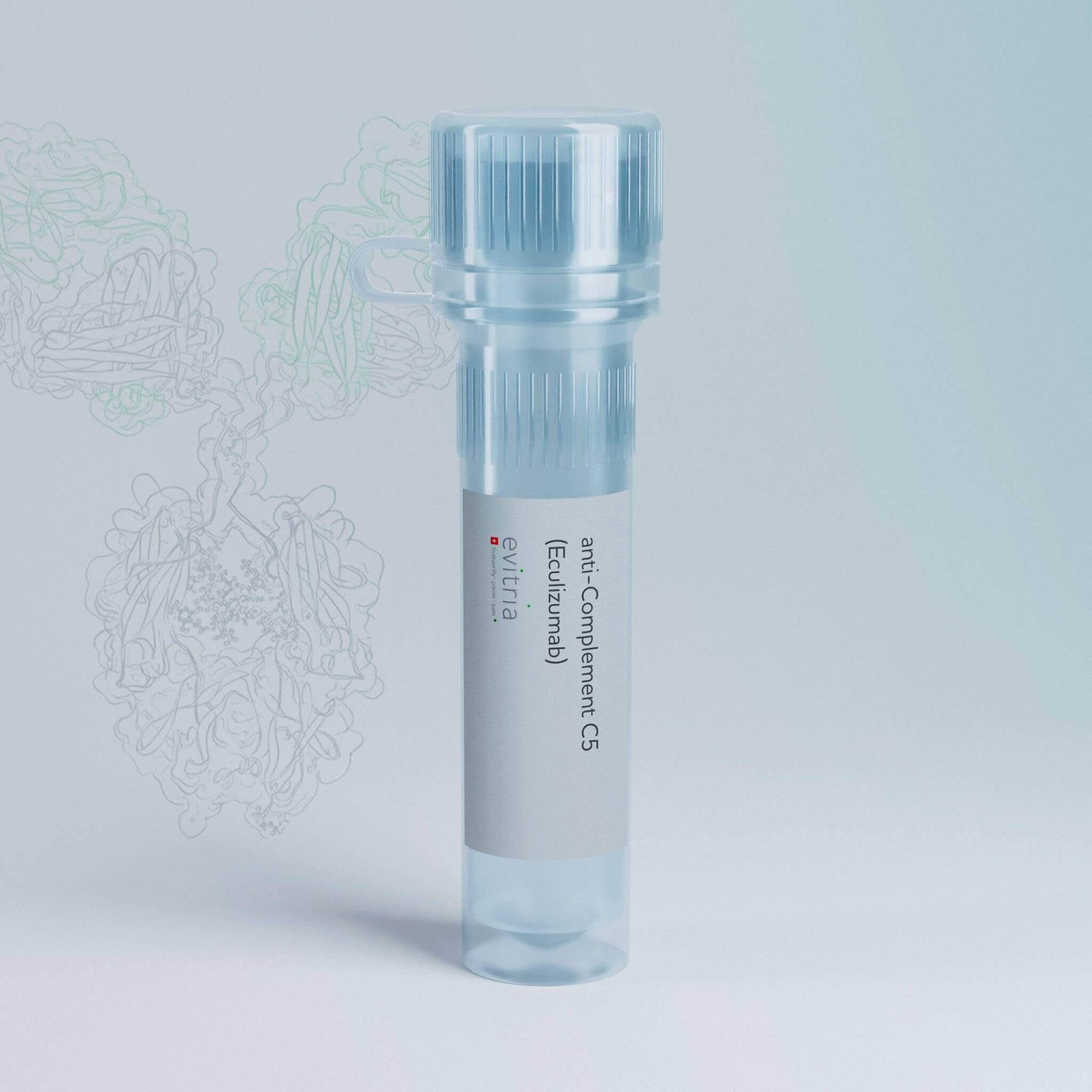
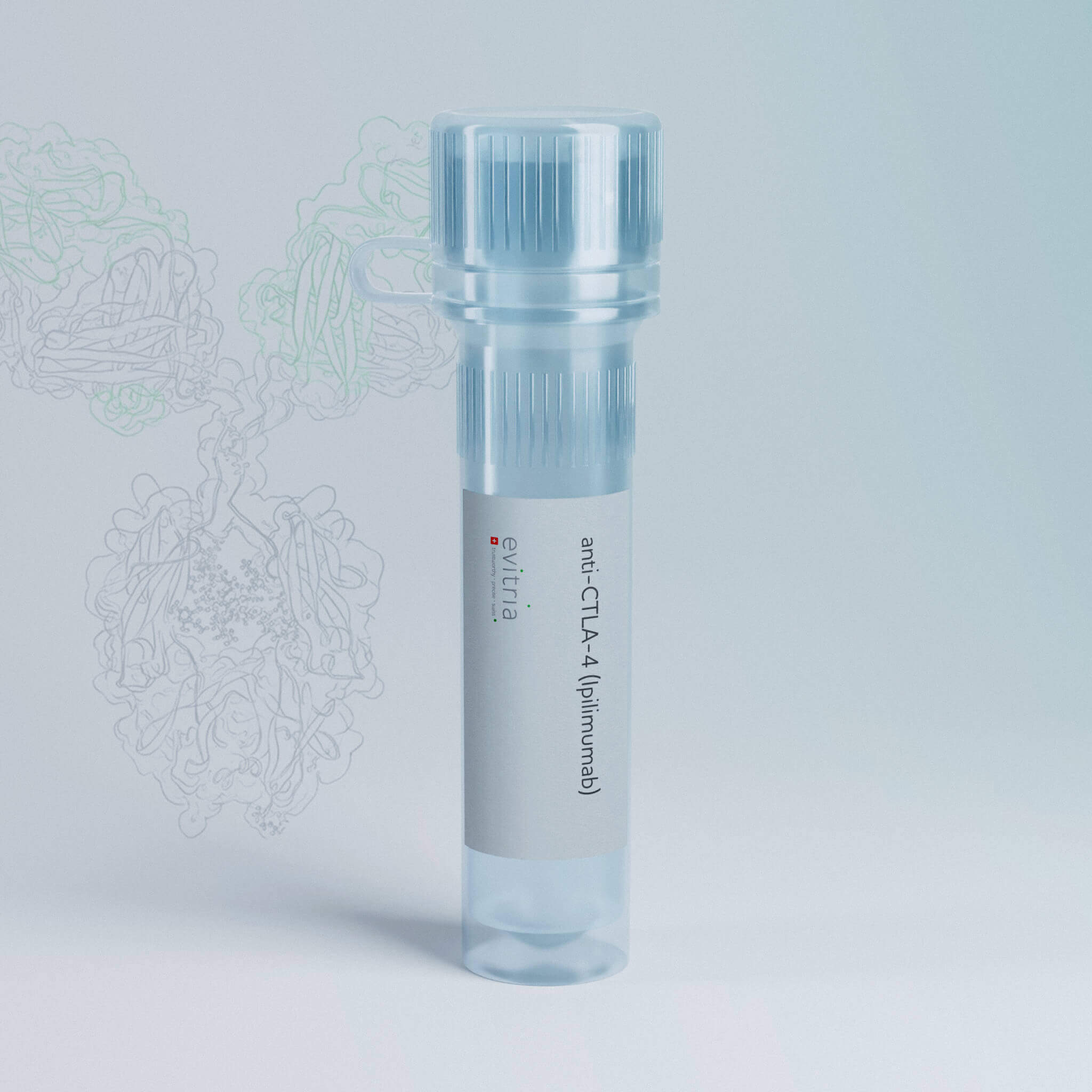
Specifications & Documentation
| Attribute | Standard for eviSIMILAR products |
|---|---|
| Expression system | CHO, transient |
| Purification | Protein A affinity |
| Purity | ≥ 98 % monomer by SEC-HPLC |
| Endotoxin | <1EU/mg |
| Formulation | Dulbecco’s PBS (pH 7.2-7.4) |
| Pack sizes | 1 mg, 5 mg and 50 mg as standard; larger quantities on request |
| Shipping and storage | Stored at -80°C, can be shipped frozen on dry ice or thawed at 4°C. |
| Documentation | Certificate of Analysis stating identity, concentration, quantity, purity, buffer, endotoxin |
eviSIMILAR antibodies are not pharmacopoeial or metrological reference standards. They are not a substitute for materials such as the NISTmAb (NIST RM 8671), WHO International Standards or Ph. Eur. chemical reference substances, which carry assigned values and formal metrological traceability.1
What Are Biosimilar Antibodies, And What Is eviSIMILAR?
A biosimilar is a regulatory category. Under the US BPCI Act (351(k) pathway) and the EMA guideline on similar biological medicinal products, a biosimilar is a biologic that has been approved after a stepwise comparability exercise showing no clinically meaningful differences from a licensed reference product in quality, safety and efficacy.2 3 Because biologics are produced in living cells, an exact copy is not achievable in the way it is for a small-molecule generic, which is why the standard is “highly similar” rather than “identical”.4
eviSIMILAR antibodies are recombinant research reagents that reproduce the published amino acid sequence of a clinically validated therapeutic antibody. They are widely used as reference antibodies, benchmark molecules and positive controls in therapeutic antibody R&D.
This distinction matters in practice. Fc-mediated functions are sensitive to glycosylation: core afucosylation increases FcγRIIIa affinity and ADCC by roughly one to two orders of magnitude, and galactosylation and sialylation modulate C1q binding and CDC.5 6 7 An antibody with a correct sequence but a different glycoform will therefore not necessarily reproduce the originator’s effector-function readout. Where Fc function is central to your assay, review the product’s expression system and glycosylation information, or discuss a defined glycoengineered variant with our team.
| Matched to the reference antibody | Not matched, and not claimed |
|---|---|
| Amino acid sequence of VH, VL, CH and CL as published | Glycan profile, including fucosylation and sialylation |
| Target antigen and epitope | Charge variant and aggregate profile |
| Isotype and subclass, including engineered Fc regions where part of the original design | Host cell line, clone and manufacturing process |
| Expected target-binding behaviour | Drug product formulation and excipients |
| Demonstrated potency, PK or immunogenicity comparability |
Sequences are derived from public sources, including WHO INN proposed and recommended lists, patent literature and public sequence databases.8
Request eviSIMILARs
Send us your inquiry, and we will contact you promptly with details.
Why Choose Recombinant Antibody Analogs From evitria?
When the available portfolio does not meet a project’s requirements, evitria can adapt an existing antibody or generate a custom recombinant antibody for the relevant therapeutic target. This flexibility supports tailored assay development and preclinical research.
Key Advantages & Offerings:
- Available Antibody Formats: Choose from human, humanized, chimeric and murine antibodies with different isotypes and subclasses, depending on the product.
- Custom Antibody Development: evitria can adapt an existing antibody or generate a custom recombinant antibody for your therapeutic R&D requirements.
- Scalable Aliquot Sizes: Tailor orders to your specific experimental scale with standard inventory options including 1 mg, 5 mg, and 50 mg quantities (please verify current stock upon ordering).

Research Applications
01
Binding assays and target validation
Use eviSIMILAR antibodies as positive controls in ELISA, SPR, BLI, flow cytometry and cell-based binding assays. Examples: trastuzumab as a HER2-binding control on SK-BR-3 cells; cetuximab in EGFR ligand-blocking assays; rituximab as a CD20 control on Raji or Daudi cells.
02
Effector function assays
Wild-type IgG1 reference antibodies against well-characterised targets provide a defined benchmark in ADCC, ADCP and CDC assays, and in FcγR and C1q binding studies. Rituximab-CD20 and trastuzumab-HER2 are among the best-documented model systems for these formats.4 9 Interpret against the glycosylation caveat above.
03
Benchmarking engineered candidates
Run a sequence-matched wild-type IgG1 alongside your own Fc variants to separate paratope-driven from Fc-driven effects. This is the standard control design when characterising Fc-silenced (for example LALA-PG), afucosylated or half-life-extended (for example YTE) molecules.10 11
04
Assay development and method optimization
Reference antibodies support assay setup, range-finding, troubleshooting, operator training and system suitability checks during method development.
05
Analytical and preclinical research
Suitable as comparator material in characterisation workflows and in preclinical research where the format, isotype and available documentation fit the study design. As with any research reagent, suitability must be verified in the specific experimental system.
Beyond The Catalog: Custom Reference Antibodies
evitria’s core business is CHO-based recombinant antibody expression, so eviSIMILAR products can be adapted rather than taken as-is:
- Isotype and subclass switching, for example the same variable domains as human IgG1, IgG2, IgG4 or mouse IgG2a
- Fc engineering, including effector-silenced variants (LALA, LALA-PG, N297A/Q aglycosyl), afucosylated antibodies for enhanced ADCC, and FcRn-binding variants
- Fragment formats, including Fab and F(ab’)2
- Sequences not in the catalog, expressed from a published or customer-supplied sequence
- Larger scales, from tens of milligrams to gram quantities


How To Choose The Right eviSIMILAR Product
- Define the purpose. Positive control, benchmark, assay development material or comparator.
- Identify the reference antibody and target antigen, and confirm the epitope is the one relevant to your readout.
- Check species and format (human, humanized, chimeric, murine) against your model system and your detection reagents, especially anti-species secondary antibodies.
- Check isotype and subclass. This determines FcγR and complement engagement and often matters more than the target.
- Review Fc mutations and glycosylation whenever effector function, FcRn binding or Fc receptor interactions could influence the result.
- Match the application to the specifications, including purity, endotoxin and buffer compatibility.
- Confirm quantity, concentration and buffer suit your handling and dosing requirements.
- Validate in your own system before committing to a study.
Need help selecting a reference antibody? Contact the evitria team with your target, assay format and study design.

Need A Reference Antibody For Your Therapeutic Research?
Explore the eviSIMILAR portfolio or contact evitria for help selecting the right product for your assay.
Regulatory Status And Conditions Of Use
- eviSIMILAR antibodies are supplied for Research Use Only. They are not for use in humans, and not for clinical, diagnostic or therapeutic applications.
- They are not FDA- or EMA-approved biosimilars, are not interchangeable with, and are not substitutes for any originator medicinal product.
- They are not pharmacopoeial or metrological reference standards.
- Not for resale or redistribution.
- International nonproprietary names are used solely to identify the reference sequence. evitria is not affiliated with, sponsored by or endorsed by the originator companies, and no endorsement is implied.
- Sale conveys no license under any third-party patent. Customers are responsible for determining freedom to operate in their jurisdiction and application.
FAQs
Researchers can use eviSIMILAR products as reference materials or controls in relevant binding, functional and analytical studies. Their suitability depends on the product and the intended experimental system.
eviSIMILAR includes recombinant antibody analogs corresponding to established therapeutic antibodies such as cetuximab, ipilimumab, pertuzumab, rituximab, trastuzumab, bevacizumab, adalimumab, alemtuzumab, panitumumab, muromonab, eculizumab and omalizumab. Please refer to the current product portfolio for the available formats and specifications.
No. eviSIMILAR products are supplied for Research Use Only and are not interchangeable with the original therapeutic products.
eviSIMILAR products are research materials, not the original commercial therapeutic products. Check the product-specific format, isotype, subclass and engineering mutations, and evaluate suitability in the intended assay before use.
The portfolio includes human, humanized, chimeric and murine antibody formats, with different isotypes, subclasses and engineered variants. The current inventory records 1 mg, 5 mg and 50 mg aliquot formats for eviSIMILAR products. Confirm current availability, concentration and buffer with evitria when ordering.
They can be used as reference materials or positive controls in relevant binding, functional and analytical studies in therapeutic R&D. Suitability depends on the product, assay design and experimental system, so each application should be validated by the researcher.
No. eviSIMILAR antibodies are not intended for use in humans, clinical or diagnostic applications, or as therapeutic products.
Contact the evitria team with your target, intended assay, preferred format and required quantity. The team can provide product information, confirm availability and support your selection of a suitable reference antibody.
evitria applies product-specific characterization and documentation to support the use of eviSIMILAR antibodies in therapeutic R&D. Depending on the product, available information may include antibody format, identity, concentration, buffer, purity and stability timepoint data.
References
- Schiel JE, Turner A, Mouchahoir T, et al. The NISTmAb Reference Material 8671 value assignment, homogeneity, and stability. Analytical and Bioanalytical Chemistry. 2018;410(8):2127-2139. DOI: 10.1007/s00216-017-0800-1. ↩︎
- U.S. Food and Drug Administration. Scientific Considerations in Demonstrating Biosimilarity to a Reference Product: Guidance for Industry. FDA, Silver Spring, MD, 2015. ↩︎
- European Medicines Agency, Committee for Medicinal Products for Human Use. Guideline on Similar Biological Medicinal Products. CHMP/437/04 Rev 1, EMA, Amsterdam, 2014. ↩︎
- Kirchhoff CF, Wang XM, Conlon HD, Anderson S, Ryan AM, Bose A. Biosimilars: Key regulatory considerations and similarity assessment tools. Biotechnology and Bioengineering. 2017;114(12):2696-2705. DOI: 10.1002/bit.26438. ↩︎
- Shields RL, Lai J, Keck R, et al. Lack of fucose on human IgG1 N-linked oligosaccharide improves binding to human FcγRIII and antibody-dependent cellular toxicity. Journal of Biological Chemistry. 2002;277(30):26733-26740. DOI: 10.1074/jbc.M202069200. ↩︎
- Kaur H. Characterization of glycosylation in monoclonal antibodies and its importance in therapeutic antibody development. Critical Reviews in Biotechnology. 2021;41(2):300-315. DOI: 10.1080/07388551.2020.1869684. ↩︎
- Peschke B, Keller CW, Weber P, Quast I, Lünemann JD. Fc-galactosylation of human immunoglobulin gamma isotypes improves C1q binding and enhances complement-dependent cytotoxicity. Frontiers in Immunology. 2017;8:646. DOI: 10.3389/fimmu.2017.00646. ↩︎
- World Health Organization. International Nonproprietary Names (INN) for biological and biotechnological substances: a review. WHO, Geneva, current edition. ↩︎
- Wang W, Erbe AK, Hank JA, Morris ZS, Sondel PM. NK cell-mediated antibody-dependent cellular cytotoxicity in cancer immunotherapy. Frontiers in Immunology. 2015;6:368. DOI: 10.3389/fimmu.2015.00368. ↩︎
- Lo M, Kim HS, Tong RK, et al. Effector-attenuating substitutions that maintain antibody stability and reduce toxicity in mice. Journal of Biological Chemistry. 2017;292(9):3900-3908. DOI: 10.1074/jbc.M116.767749. ↩︎
- Dall’Acqua WF, Kiener PA, Wu H. Properties of human IgG1s engineered for enhanced binding to the neonatal Fc receptor (FcRn). Journal of Biological Chemistry. 2006;281(33):23514-23524. DOI: 10.1074/jbc.M604292200. ↩︎