

Recombinant antibody expression, the process of producing antibodies with defined sequences, is a crucial aspect of biotechnology. Employing recombinant antibody expression strategies ensures high batch-to-batch consistency and reproducibility and maintains high specificity. Whether it be for biomarker detection, life science research, or therapeutics, recombinant antibodies play a significant role. Recognizing this, evitria partners with biotechnology businesses to provide recombinant antibody services for custom-made products. This blog aims to provide a comprehensive overview of the main process steps involved in recombinant antibody expression, highlighting their importance and application in biotechnology.
Key Takeaways for Biopharma R&D
- Recombinant Antibody Expression: The in vitro synthesis of antibodies using recombinant DNA technology and mammalian host cells, ensuring precise sequence fidelity, high batch-to-batch consistency, and the elimination of hybridoma-related genetic drift.
- The CHO Advantage: While E. coli and HEK293 serve early research, Chinese Hamster Ovary (CHO) transient expression is the gold standard for therapeutic development. CHO cells yield human-like glycosylation profiles, mitigating immunogenicity and significantly reducing “translation risk” from discovery to clinical scale-up.
- Accelerating Discovery: High-Throughput (HTP) CHO expression enables early-stage biotechs to validate AI-designed libraries in weeks, effectively reducing runway risk and accelerating the path to lead candidate selection.
- Complex Formats: Advanced recombinant techniques allow for the seamless reformatting of sequences into complex therapeutics, including bispecific and multispecific antibodies, overcoming the physical stability limitations of traditional methods.
Expression of recombinant antibodies explained
Recombinant antibody expression describes the process of producing antibodies using recombinant DNA technology. This involves genomic techniques including cloning the genes that encode the antibody of interest and then expressing them in a suitable host organism, such as bacteria, yeast, or mammalian cell lines.
Engineering antibodies using recombinant technology enables the development of antibodies into different isotypes, but also different formats, each with defined characteristics, such as bispecific antibodies. Recombinant monoclonal antibodies provide advantages in homogenous specificity and high affinity, as well as defined effector functions. For this reason, recombinant antibody engineering has revolutionized the development of novel diagnostics, therapeutics, and research tools.
Comparison of recombinant antibodies with polyclonal and monoclonal antibodies
Recombinant antibodies, also known as engineered antibodies, are immunoglobulins produced through genetic engineering techniques. These techniques involve combining genetic material encoding the heavy and light chains of an antibody to create a functional antibody molecule that binds to a specific epitope.
Differences between polyclonal and recombinant antibodies
In contrast to the polyclonal and monoclonal antibody production process, recombinant antibody production produces antibodies using in vitro rather than in vivo techniques, which do not necessitate immunization of animals or hybridoma cultivation.
Polyclonal antibodies are a heterogeneous mix of antibodies with different affinities and specificities. The advantages of the inexpensiveness of the process and high specificity in detecting low-quantity proteins result in polyclonal antibodies still remaining extensively used as analytical tools for biomedical research, food safety assessments1 and treatment of acute rejection in renal transplantation – rabbit anti-thymocyte globulin (rATG)2. The disadvantage of polyclonal antibodies is that they can display variable performance between different batches. Recombinant antibodies, on the other hand, have advantages over polyclonal antibodies because of their defined antibody sequences and specificity.
Differences between monoclonal and recombinant antibodies
Monoclonal antibodies are derived from a single B cell parent clone, and antibodies bind highly specifically to a single epitope. The disadvantage of monoclonal antibodies produced using hybridoma cell lines is they undergo genetic drift over time, which can give rise to variants and introduce lot-to-lot variability. Recombinant antibodies circumvent this problem by allowing sequence-specific antibodies to be expressed and produced in the expression host. This highly controlled and monitored process ensures high reproducibility. This is one of the reasons monoclonal antibodies are often converted to recombinant antibodies by amplifying and sequencing cDNAs encoding the VH and VL domains from a hybridoma cell line.
Development of recombinant antibody technology
Chimeric antibodies were the first recombinant antibodies originally developed by Morrison and Neuberger in 19843. The chimeric antibody design consisted of light and heavy chains of mouse variable regions combined with human constant regions in an effort to produce less of an immune response in humans compared with mouse monoclonals. Mammalian lymphoid cells were used to produce the chimeric antibody.
The first recombinant chimeric antibody, abciximab, was approved by the FDA for cardiovascular disease in 1994 and used the same murine hybridoma process with the replacement of the constant region with a human constant domain. Abciximab targeted the glycoprotein (GP) IIb/IIIa receptor of human platelets and inhibited platelet aggregation. The recombinant chimeric strategy led to the development of humanized antibodies — where all mouse antibody regions are replaced with human genomic sequences except for the complementarity-determining regions (that directly bind to the antigen). The success of humanized antibodies in therapeutic use consequently led to the discovery of fully human antibodies in 1990 by Sir Gregory Winter and George Smith using antibody phage display technology.

Main steps in recombinant antibody expression
Recombinant antibody expression usually involves the following stages, which can vary depending on the ultimate objective of the project:
- Selection of appropriate host expression system
Recombinant proteins can be produced by protein synthesis machinery from prokaryotic or eukaryotic cellular systems. The choice of host cell—for example, bacterial, yeast, insect, or mammalian cell lines—is determined by the functional activity required, protein type, and desired yield. - Designing and optimizing the expression vector
Following the design of the target and expression vectors, a cloning scheme, such as a parallelization strategy, is employed to enable high throughput cloning and expression. - Defining the strategy of the gene delivery
Numerous techniques exist to introduce an antibody gene of interest into cells via either stable or transient transfection. Transient transfection and stable transfection can both be employed. Methods include chemical transfection (e.g. polyethyleneimine), using electric current to alter membrane permeability (electroporation), or Recombinant Viral Transduction, allowing stable transgene integration and continuous expression for difficult-to-transfect cells. - Optimizing the culture conditions
Healthy cell growth and transfection susceptibility rely on various components in the supernatant, such as glucose, nutrients, serum, and vitamins. Additional media components, such as hormones and growth factors, have been shown to lead to optimizations in antibody expression. - Determining the purification approach
Purification of recombinant antibodies can be achieved manually or through chromatography systems (e.g. flow cytometry, ELISA, protein A purification, or Western blotting), depending on the application and purity/concentration needs.
What is needed in recombinant antibody expression?
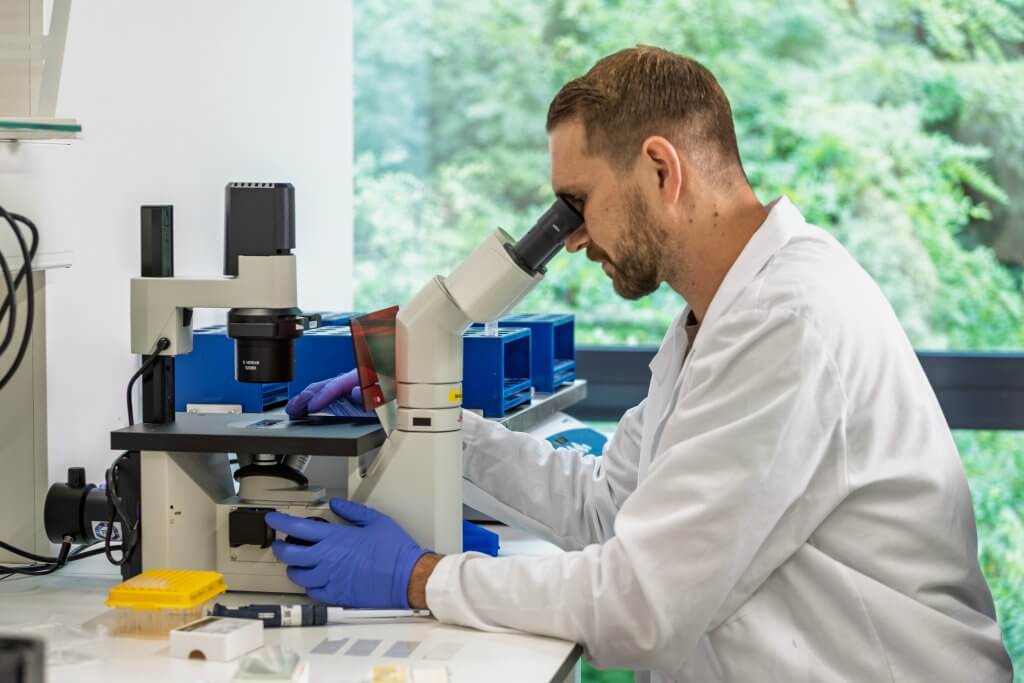
Whether for small- or large-scale production, producing recombinant proteins necessitates trained labour and a fully equipped biotech laboratory, which includes access to sequencing technologies, cloning reagents, molecular biology equipment, cell culture incubators and consumables, microscopes, immunoassays, protein purification and analysis tools. Scaling up the production of the manufacturing process would require using a bioreactor.
Expression systems for recombinant antibodies
The choice of expression system for recombinant protein expression depends on various factors, such as the size and complexity of the antibody, the desired yield and quality of the final product, and available resources.
Bacteria, including Escherichia coli (E. coli), are often used to express recombinant antibodies since they are easily manipulated and have a fast growth rate. Indeed, there are more than 85 approved E. coli-produced protein therapeutics in the US/EU, such as Caplacizumab (Cablivi®), Brolucizumab (Beovu®), and Tebentafusp (Kimmtrak®)4. However, protein aggregation into inclusion bodies can hamper recombinant protein expression in bacteria. If this occurs, proteins must be resolubilized and refolded into functional forms.

Why CHO Transient Expression Minimizes Translation Risk
While E. coli and HEK293 cells are frequently utilized in early academic research due to their rapid growth, they introduce significant downstream vulnerabilities for biopharma pipelines. HEK293 cells can generate non-human post-translational modifications or distinct glycosylation patterns that fail to predict how a molecule will behave in clinical manufacturing.
To mitigate translation risk, mammalian cell lines—specifically CHO cells—are the industry imperative. CHO cells adapt effortlessly to high-density, serum-free suspension cultures and generate antibodies with human-compatible glycosylation profiles. By utilizing transient CHO expression from day one—rather than switching from HEK to CHO later in the pipeline—developers avoid costly bridging studies, unexpected aggregation issues, and developmental delays. At scale, the CHO platform ensures that a molecule expressing well at 0.1 mg will maintain its integrity and efficacy when scaled to 10 g, seamlessly connecting discovery to clinical manufacturing.
Accelerating Lead Selection: HTP Screening for AI-Designed Antibodies
For early-stage biotechs, the primary challenge is runway risk—the need to rapidly validate in-silico designs with robust in vitro data to secure funding or partnerships. Modern drug discovery increasingly relies on AI and machine learning to design highly targeted antibody sequences. However, these computational libraries must be physically expressed and validated.
By leveraging High-Throughput recombinant expression in CHO cells, R&D teams can screen thousands of AI-generated variants simultaneously. This parallelization strategy not only identifies the highest-affinity binders but also filters out candidates with poor developability profiles early in the process, saving critical time and capital.
Engineering Complex Formats: Bispecifics and Multispecifics
Recombinant antibody technology is not limited to standard IgGs; it is the fundamental engine driving next-generation therapeutics. Engineering capabilities allow for the generation of tailored antibody fragments (e.g., scFvs, VHHs) and the assembly of bispecific antibodies, which can simultaneously bind to two different antigens (such as a tumor-associated antigen and a T-cell engaging receptor).
For mid-sized pharma teams facing internal R&D capacity bottlenecks, expressing these complex formats is notoriously difficult due to chain mispairing and aggregation. Advanced recombinant antibody systems—managed by specialized external partners—can circumvent these physical stability issues. Proper formation of disulfide bonds and customized expression vectors ensure high yield and >95% purity, acting as a seamless extension of internal laboratory capabilities.
In the publication by Melo et al. in Frontiers in Immunology, researchers from the University of Groningen detailed their collaboration with evitria to produce a bispecific antibody that enhances the anti-tumour activity of T cells. By targeting both CD27 and epidermal growth factor (EGFR), the bispecific antibody, CD27xEGFR, could specifically target carcinomas, which commonly overexpress EGFR.
Concomitantly targeting co-stimulation of CD27 by crosslinking enhanced T-cell activation in terms of proliferation to target tumour cells. Potential toxicity was reduced in the bispecific antibody design by introducing LALAPG point mutations to yield an Fc-silent human IgG1, thus reducing FcR-mediated antibody effector functions5.
Production of recombinant antibodies at evitria
At evitria, we offer absolute scientific flexibility as a premium, Swiss-based strategic development partner. We do not just provide recombinant antibody expression services; we de-risk your entire early-stage pipeline.
With 15 years of exclusive, singular focus on transient expression in CHO cells, our platform has executed over 140,000 transfections and successfully expressed more than 25,000 unique antibodies. We understand the precise biochemical hurdles of antibody production, which is why we guarantee exceptional quality, including endotoxin levels of <1 EU/mg and >95% purity.
Whether you are an early-stage startup needing rapid HTP validation for an AI-designed library, or a large pharma requiring reliable scale-up (from 0.1 mg to gram-scale) for complex bispecific formats, our specialized CHO platform ensures rapid execution without compromising clinical translatability.
FAQs
Recombinant antibodies are generated by cloning genes encoding the variable regions of the heavy and light chains of an antibody (previously individualized via, e.g., an antibody library) into host cells, commonly mammalian cell lines. This can be achieved with various vector systems, such as plasmid or viral vectors. Followed by the transcription and translation of the inserted nucleic acids, the host cells then produce the recombinant antibodies, which can be full-length or other engineered antibody formats. Recombinant antibodies can be fully human antibodies or humanized to reduce immunogenicity, and are subjected to further purification and validation processes.
Recombinant antibodies are created from the heavy and light chains of an antibody using in vitro expression. This process results in a functional antibody molecule that can bind to a specific epitope. These antibodies can be developed into various formats (e.g. IgG or IgM) with defined characteristics and can be produced in large quantities in a controlled manner. Recombinant antibodies offer advantages such as homogeneous specificity, affinity, and defined effector functions. The engineering of recombinant antibodies has significantly impacted the development of new diagnostics, therapeutics, and research tools.
References
- Campbell, K. et al. Assessment of specific binding proteins suitable for the detection of paralytic shellfish poisons using optical biosensor technology. Anal Chem 79, (2007). ↩︎
- FDA. Thymoglobulin. Approved blood products https://www.fda.gov/vaccines-blood-biologics/approved-blood-products/thymoglobulin (2024). ↩︎
- Morrison, S. L., Johnson, M. J., Herzenberg, L. A. & Oi, V. T. Chimeric human antibody molecules: Mouse antigen-binding domains with human constant region domains. Proc Natl Acad Sci U S A 81, (1984). ↩︎
- Rashid, M. H. Full-length recombinant antibodies from Escherichia coli: production, characterization, effector function (Fc) engineering, and clinical evaluation. mAbs vol. 14 Preprint at https://doi.org/10.1080/19420862.2022.2111748 (2022). ↩︎
- Melo, V. et al. EGFR-selective activation of CD27 co-stimulatory signaling by a bispecific antibody enhances anti-tumor activity of T cells. Front Immunol 14, (2023). ↩︎