

High-Throughput (HTP) Antibody Production is the parallel expression and purification of 24 to several hundred antibody variants in a single standardized workflow. It bridges sequence libraries and decision-grade data by generating assay-ready material within weeks, so teams can rank leads before committing to costly scale-up.
HTP sits at the junction between candidate identification and lead selection. Candidate sequences from hybridoma campaigns, single B cell technologies, phage display, synthetic libraries, or AI-driven design feed into the HTP workflow. The output is a comparative dataset that supports go/no-go decisions with manufacturing-relevant biology.
This guide covers the essential components of HTP, why the choices made at the screening stage determine downstream success, and how a CHO-native recombinant antibody production service removes the host-switch risk that derails many programs at the manufacturing boundary. Looking for an HTP antibody production service partner rather than background reading?
What Is High-Throughput Antibody Production?
High-Throughput Antibody Production[1] refers to the parallel expression and purification of multiple monoclonal antibodies or engineered formats within a single standardized workflow. The output is a comparative dataset designed to support lead ranking and early go/no-go decisions.
Candidate sequences entering the HTP workflow may originate from hybridoma campaigns, single B cell technologies, phage display, synthetic libraries, or AI-driven design. HTP validates those sequences as physical proteins before costly scale-up begins, turning protein expression from a slow bottleneck into a rapid discovery engine.
The strategic benefits of High-Throughput Antibody Expression in Early-Stage Discovery extend beyond speed: by generating manufacturing-relevant data from the first screening run, programs avoid the costly resets that occur when discovery and manufacturing data diverge.
The HTP Workflow: From Sequence to Purified Antibody

Designing an HTP screening campaign is a critical pre-step that directly determines data quality. Teams decide which format to use, how constructs are batched, and which reference antibodies are included to handle batch effects.
A complete HTP run moves through a standardized cycle. It starts with gene synthesis and codon optimization, then uses specialized expression vectors and robotic systems for automated transfection of mammalian cells. This robotic approach to recombinant HTP antibody production ensures data comparability and maintains discovery momentum.
Protein A fiber chromatography handles the rapid cycling purification step, increasing throughput up to 20-fold compared to resin-based chromatography. High-quality reagents and precise protocols ensure that every plasmid produces a comparable, validated data point.
For teams planning their first campaign, you will find a detailed breakdown of what determines turnaround time in HTP antibody production in the following article.
HTP Automation and Batch Effect Elimination
Standardized HTP data is only trustworthy if the production environment remains a technological constant. High-throughput platforms leverage liquid-handling robotics and consistent purification protocols to eliminate the human-induced noise of manual workflows.
Batch effects are non-biological, technical variations that occur when samples are processed in different batches, for example on different days, in different labs, or by different technicians. These variations introduce noise, mask real biological signals, and can lead to incorrect conclusions.
Robotic execution ensures that the amino acid sequence remains the only independent variable in your dataset. This consistency is essential for maintaining a high signal-to-noise ratio during large campaigns.
Out detailed article about how Automation in HTP Antibody Production ensures low Batch-to-Batch variation in transient expression covers the specific mechanisms involved:
Expression Systems: CHO vs. HEK293 and the Translation-Trap
The choice of expression system has long-term consequences for clinical success. Over 70% of approved recombinant biopharmaceuticals, including monoclonal antibodies, are produced in CHO cells.[2] Glycosylation profiles and biophysical behavior in CHO at small-scale screening predict behavior at manufacturing scale.
The HEK293 vs. CHO choice for HTP impacts glycosylation, folding, and downstream translatability far more than unit cost comparisons suggest.
Many researchers start with HEK293 for early discovery and encounter problems when switching to CHO later. Differences in glycosylation patterns between HEK293 and CHO cells directly alter antibody half-life and therapeutic activity.
A CHO-native environment from day one keeps early data valid throughout the development lifecycle. This is why HTP screening results sometimes fail to translate to manufacturing when a host switch is involved.
The Economics of HTP: ROI and Hidden Costs
Selecting a host system based on upfront unit cost alone is misleading. The cheapest choice often produces the largest downstream liability, because early savings dissolve when the project must be reset for manufacturing.
In early antibody discovery, the price per construct often drives decisions toward cheaper HEK293 or bacterial material. A late-stage discovery reset, however, can cost millions in lost time and duplicated effort. The average capitalized cost of drug development exceeds 2.5 billion dollars.[3]
Aligning discovery with manufacturing standards from the outset is the most effective way to protect your therapeutic investment. The economic argument for HTP is therefore not about the cost of a single run, but about the cost of decisions made with low-quality data.
Hidden costs of cheap HTP material accumulate across re-screening, re-expression, and late-stage attrition. CHO-native expression is the more cost-effective choice over the full program lifecycle.
HTP Quality Control: From Protein to Assay-Ready Data
A purified antibody without analytical characterization is an unknown entity. The minimum standard QC package for HTP material includes titer and concentration measurement as well as purity analysis via high-resolution CE-SDS and HPLC-SEC.
Endotoxin measurement is required to ensure material is suitable for functional and in vivo assays.
The distinction between protein delivered and assay-ready material determines whether downstream screening results can be trusted. Assay-ready material requires standardized chromatography and precise analytics, so downstream results reflect antibody properties rather than process artifacts.
Developability: Screening for Manufacturability from Day One
More than 30% of antibodies entering clinical trials never reach approval due to biophysical liabilities.[4] Embedding early developability assessment into HTP screening means ranking candidates not just by potency but by their likelihood of surviving industrial development.
Identifying failures early saves costs and protects the antibody development path. This filter ensures that only the most robust molecules move from primary into secondary screening cycles. A combination of AI-based screening and high-throughput experimental approaches is the most reliable way to identify molecules with the right properties early.
The Five Critical Developability Readouts
- Thermostability: Using melting points to predict structural integrity and shelf-life.
- Aggregation Propensity: Detecting self-association through SEC.
- Chemical Stability: Screening for sequence-encoded liabilities like oxidation or deamidation.
- Nonspecific Binding: Eliminating molecules that exhibit poor pharmacokinetics in animal models.
- Expression Titer: Validating early that a candidate meets minimum yield thresholds.
These five readouts are covered in depth in: Developability-by-Design: The 5 Readouts to Check Before Picking Winners.
HTP and AI-Driven Antibody Discovery
AI platforms generate thousands of candidate sequences in hours, but physical validation remains the primary bottleneck. HTP provides the physical ground-truth needed to refine predictive models and close the gap between digital design and physical reality.
This iterative loop works only if the AI training data is consistent and high-quality. Standardized HTP ensures the sequence is the only variable in your training dataset. Inconsistent expression data teaches AI models laboratory noise rather than biological signal, a problem explored in depth in: Garbage In, Garbage Out: Why AI Antibody Discovery Needs Data Integrity.
For a deeper look at how HTP supports AI-designed antibody discovery via physical validation at scale, see the dedicated article.
High-Throughput Screening (HTS): Moving from Production to Data
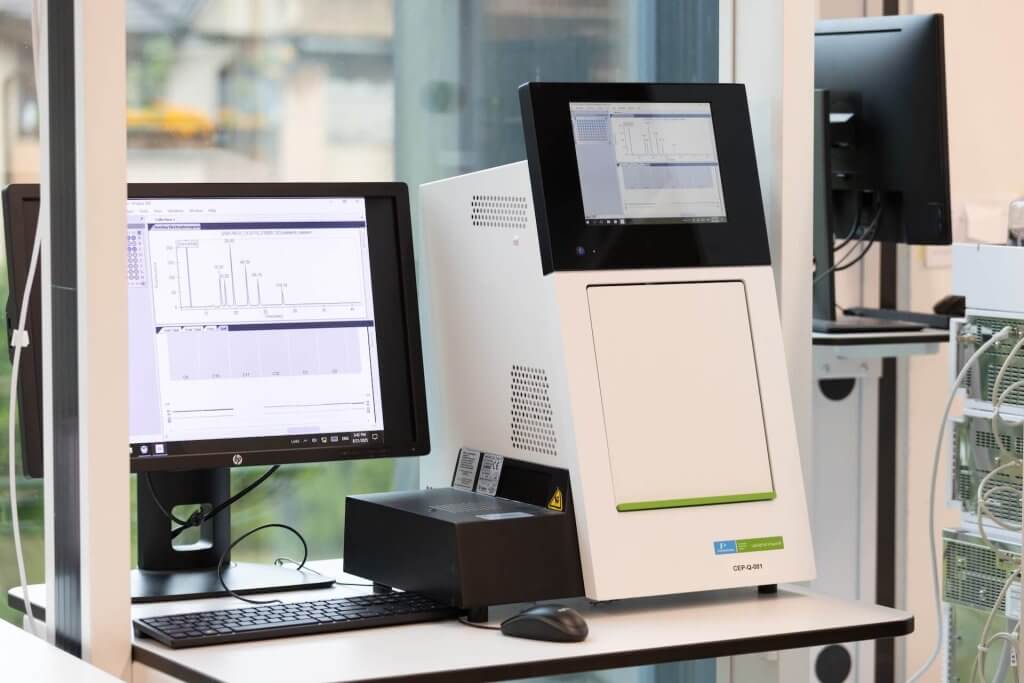
High-Throughput Screening (HTS) focuses on characterizing thousands of molecules to generate actionable digital insights. In antibody development, HTP is the manufacturing engine while HTS is the analytical laboratory.
Delivering purified antibodies directly to the HTS pipeline transforms recombinant proteins into strategic decisions. Assay-ready material accelerates these cycles by entering biochemical or cell-based assays without re-buffering or re-purification steps.
Whether the focus is antigen binding, stability, or biological functionality, the quality of the HTS readout depends on the quality of the physical protein.
Scaling Up: Small-scale HTP vs. Large-Scale Production
HTP and large-scale antibody production represent two ends of the drug discovery journey. HTP is optimized for breadth and lead selection at small scale, while large-scale production provides the quantities required for clinical validation.
The transition between them is rarely a single step. A third phase sits between the two: intermediate-scale production, typically 1 mg to 1 g, which provides material for initial in vitro characterization, early in vivo studies, and lead confirmation before significant manufacturing investment.
| HTP Production | Intermediate-Scale | Large-Scale | |
|---|---|---|---|
| Primary goal | Screening & lead ranking | Lead confirmation & early in vivo | Preclinical & clinical supply |
| Throughput | 24 to hundreds of variants | 3 to 20 leads | 1 to 3 leads |
| Typical scale | 0.2 mL to ~50 mL | ~50 mL to ~5 L | 10 L to 2,000 L |
| Expression | Transient CHO | Transient CHO | Stable CHO cell lines |
Advancing too many candidates past HTP without adequate comparative data, or bypassing intermediate-scale validation, are two of the most common and costly mistakes in early drug discovery. Deciding when to switch from transient to stable expression in HTP is tightly coupled to this transition and deserves careful consideration at each stage.
Choosing the Right HTP Production Partner
Selecting an HTP provider is a strategic decision that defines the quality of your research data. The difference between a service factory and a scientific co-pilot becomes consequential when molecule behavior is unpredictable.
Before choosing a partner in HTP protein production, researchers should ask six critical questions:
- Do you use CHO or HEK293 as the standard host?
- Is the HTP system identical to the one used for clinical scale-up?
- What specific characterization is included in the standard QC package?
- How are batch effects managed across large construct panels?
- Can the platform accommodate non-standard formats and complex engineered constructs?
- Is there scientific flexibility to adapt expression parameters?
The top problems with HTP antibody expression are almost always traceable to gaps in one of these six areas.
Strategic HTP Partnership with evitria
evitria runs HTP in a proprietary CHO-native environment, so the quality of your discovery data supports every downstream investment. This eliminates host-switch concerns and re-optimization delays at the transition to manufacturing.
Our recombinant antibody production service combines Swiss precision with more than 15 years of exclusive CHO transient expertise and a track record of over 140,000 successful transfections.
Our workflows are designed for efficiency and manufacturing relevance through the following technical foundations:
- High Capacity: Multi-construct screening campaigns from 24 to several hundred constructs per project.
- Rapid Delivery: Standard transient CHO timelines with assay-ready material in four weeks.
- Comprehensive QC: Titer measurement, protein concentration, HPLC-SEC, endotoxin measurement, and CE-SDS in every project.
Further characterization is available through our selected expert partner network, covering downstream analytics, functional assays, and in vivo services. Candidates progress beyond expression without sourcing additional providers.
Our HTP antibody production service also provides the clean biological ground truth required for AI-based discovery pipelines to move from digital models into physical reality. We work with selected AI-discovery partners so teams can leverage these tools seamlessly.
As a strategic partner from screening through translational supply, evitria keeps your therapeutic pipeline grounded in the biology that ultimately determines clinical outcome.
Frequently Asked Questions About High-Throughput Antibody Production
HTP is the automated, parallel production of numerous antibody variants, typically 24 to several hundred, in small quantities. It allows researchers to validate digital sequences as physical proteins quickly, enabling rapid lead selection and characterization in early antibody development.
CHO cells are the global industry standard for manufacturing therapeutic antibodies. CHO-native systems from the start ensure that glycosylation, folding, and stability data are manufacturing-relevant, avoiding the translation-trap that occurs when switching from another host system to CHO later in development.
AI models require high-quality, standardized data to refine their predictions. HTP provides the physical ground-truth data for validation at scale, so AI-designed recombinant proteins actually perform as predicted in a biological environment.
Transient expression suits HTP screening and lead ranking because it is fast and flexible. Stable cell lines serve chosen lead sequences that require consistent high-yield supply for clinical manufacturing.
Failures are often caused by host-system divergence. If candidates are screened in HEK293 but manufactured in CHO, differences in glycosylation and folding can fundamentally alter the behavior of the molecule. Failures can also arise from differences in production processes, such as bioreactors, reagents, or chromatography systems.
A professional HTP analytical package includes titer measurement, concentration, HPLC-SEC for aggregation and purity, CE-SDS for structural integrity, and endotoxin levels. These analytics identify developability liabilities early.
Automated liquid handling and robotics eliminate the minute variances caused by manual pipetting and human error. Every construct in a library is treated identically, so the data reflects the sequence rather than the process.
At evitria, the standard turnaround time is approximately four weeks from sequence approval to delivery of assay-ready material. This timeline covers cloning, transient expression, purification, and comprehensive QC.
Sources
- Chambers RS. High-throughput antibody production. Curr Opin Chem Biol. 2005 Feb;9(1):46-50. PMID: 15701452. 10.1016/j.cbpa.2004.10.011
- Liang K., Luo H., Li Q. (2023). Enhancing and stabilizing monoclonal antibody production by Chinese hamster ovary (CHO) cells with optimized perfusion culture strategies. Frontiers in Bioengineering and Biotechnology, 11, 1112349. https://doi.org/10.3389/fbioe.2023.1112349
- DiMasi J.A., Grabowski H.G., Hansen R.W. (2016). Innovation in the pharmaceutical industry: New estimates of R&D costs. Journal of Health Economics, 47, 20-33. https://doi.org/10.1016/j.jhealeco.2016.01.012
- Jain T., Sun T., Durand S., Hall A., Houston N.R., Nett J.H., et al. (2017). Biophysical properties of the clinical-stage antibody landscape. Proceedings of the National Academy of Sciences, 114(5), 944-949. PubMed 28096333