

The journey from a digital antibody sequence to a physical candidate is fraught with technical liabilities. These risks often remain invisible until they cause project failure during preclinical scale-up. High-Throughput antibody production allows for the rapid evaluation of thousands of candidates but the pressure for speed often introduces structural risks.
Achieving scientific credibility requires a commitment to transparency regarding common pitfalls. A dedication to precision from the very first transfection is the only way to protect a therapeutic pipeline. This guide explores the most frequent challenges in High-Throughput workflows and the strategic decisions required to resolve them, drawing on a reliable High-Throughput Antibody Production Service as the reference point.
This guide is written by Julia Pizzolato, PhD, Commercial Scientific Liaison at evitria. With a background spanning antibody engineering, emerging modalities, and translational science, she provides technical consultation on antibody design and development, connecting deep scientific understanding with strategic decision-making.
1. Host System Divergence and the Translation Trap
A primary challenge in high-throughput screening is the use of surrogate host systems like HEK293. While these human kidney cells are perceived as easier to handle for small-scale projects they create a significant host-system divergence. Most therapeutic antibodies are ultimately manufactured in Chinese Hamster Ovary (CHO) cells.
How to avoid host-related failure:
- Maintain Host Consistency: Aligning the expression host with the manufacturing standard from the start eliminates host-dependent uncertainty.
- Assess Glycosylation Early: Divergent metabolic pathways between cell lines create unique biological signatures that affect half-life and efficacy.
- Avoid Post-Hoc Normalization: Data generated in the wrong host cell cannot be reliably adjusted to predict behavior in a manufacturing environment.
The HEK293 vs CHO in HTP comparison covers these glycosylation and folding differences in detail. This same host-system divergence explains why HTP screening results sometimes fail to translate to manufacturing.
2. Batch-to-Batch Variability and Process Noise
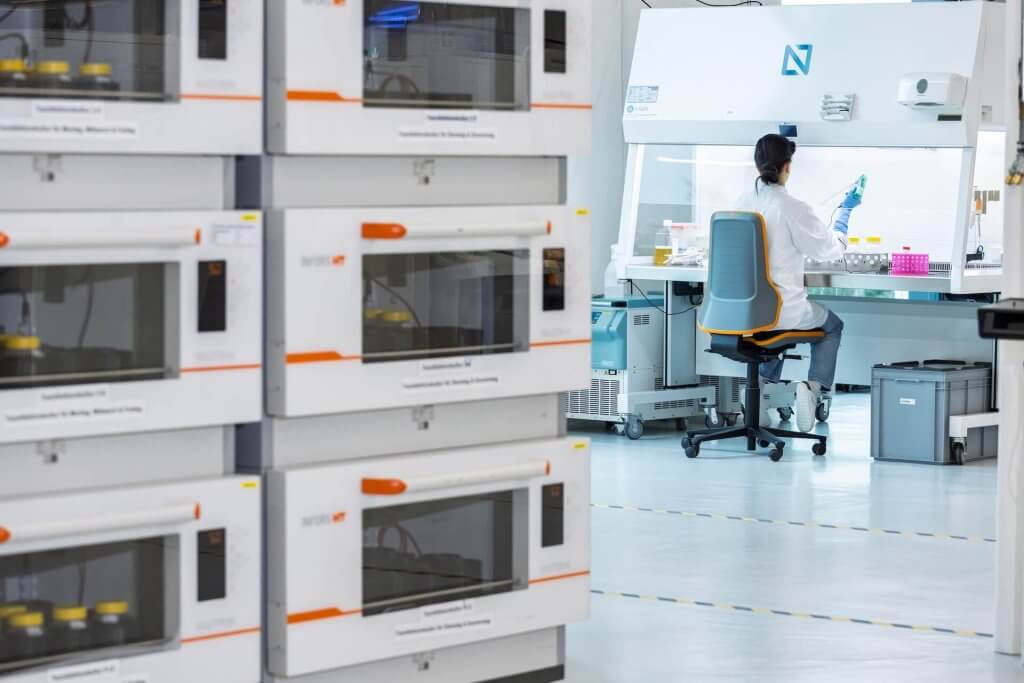
Standardized data is only trustworthy if the production environment remains a technological constant. Manual processes in a laboratory environment lead to human error and inconsistent handling. Technician-to-technician variation introduces significant batch effects that corrupt cross-construct comparisons.
Strategies for maintaining consistency:
- Implement Robotic Execution: Standardized liquid handling eliminates the minute variances caused by manual pipetting.
- Standardize Transfection Protocols: Consistent volumes and timings ensure that every sequence is treated identically across a large panel.
- Include Reference Constructs: Placing known antibodies in every run provides a stable baseline for lead ranking and quality control.
The role of Automation in HTP Antibody Production in keeping this variation low is covered in our dedicated guide.
3. Variable Expression Yields and Titer Bottlenecks
Producing hundreds of antibodies simultaneously is an impressive feat but often results in highly variable yields. Many variants may only reach the microgram level which leaves researchers with insufficient material for thorough characterization. This inconsistent output represents a major bottleneck in early-stage discovery.
How to improve yield reliability:
- Optimize Chain Ratios: Controlling the ratio between heavy and light chains during transfection ensures proper folding and secretion.
- Utilize Advanced Vector Design: Moving away from rigid plasmids allows for optimizations that improve the expression of difficult constructs.
- Focus on Secretion Efficiency: High-efficiency transfection systems provide higher titers for multiple functional assays even in small-scale runs.
Addressing yield variability at its source is what allows programs to realize all the Benefits of High-Throughput Antibody Expression, consistent, characterization-ready material across every variant in the panel.
4. Limitations in Purity and Downstream Bottlenecks
The rapid generation of thousands of samples often creates a bottleneck in the purification phase. Simplified purification systems used in high-throughput environments can lead to low purity or cross-contamination. This noise interferes with sensitive functional assays and can ruin weeks of research.
Navigating purification hurdles:
- Maintain Stringent Purity Standards: Ensuring high purity levels for every sample is essential to distinguish biological signals from process noise.
- Automate Chromatography: Standardized Protein A protocols across the panel ensure that purification does not introduce new variables.
- Monitor Endotoxin Levels: Consistently low endotoxin levels are required to ensure material is suitable for functional and in vitro assays.
5. Latent Aggregation and Stability Risks
The industry focus on rapid output frequently ignores early-stage developability. This leads to the high-efficiency production of “sticky” proteins that are inherently prone to aggregation. These liabilities are a silent killer of drug discovery programs because they cause failure during scale-up.
Methods for identifying stability risks:
- Incorporate Early Biophysical Profiling: Analytical readouts for solubility and thermostability identify high-risk candidates before major investments are made.
- Rank by Manufacturability: Teams should rank candidates not just by potency but by their likelihood of surviving industrial development.
- Ensure Structural Integrity: High-fidelity assembly protocols prevent the secretion of misfolded variants that mask the true performance of a sequence.
Structured early ranking through antibody developability assessment is the most reliable way to catch these liabilities before scale-up.
Strategic Guidance: Partnering with evitria
Success in drug discovery is defined by the quality of the data that survives the journey from the bench to the clinic. At evitria we act as your Scientific Co-Pilot by providing over 15 years of exclusive expertise in CHO-native transient expression.
Our proprietary platform leverages robotic Swiss precision and a track record of 140,000 transfections to ensure your sequence is the only variable in your dataset. We deliver assay-ready material with high purity and manufacturing relevance to ensure your candidates progress confidently through every milestone.
Frequently asked questions
Low yields force researchers to repeat expression runs or re-clone candidates which creates a significant bottleneck. This delays critical funding milestones and slows down the iterative cycles required for lead optimization.
Integrating early biophysical characterization like HPLC-SEC and utilizing a manufacturing-relevant host system like CHO is essential. This highlights stability issues before expensive scale-up begins.
Using the industry-standard host from day one ensures that glycosylation and folding profiles remain consistent. This avoids the risk of candidates behaving differently when they move from discovery to manufacturing.
Standardized robotic execution and audited QC processes ensure that every transfection is performed under identical conditions. This level of process control guarantees that the biological signature of a candidate remains consistent across multiple campaigns.
Yes standardized robotic platforms provide a clean training set where the sequence is the only variable. This eliminates the process noise that typically causes model overfitting and digital hallucinations.
Sources
- DiMasi, J. A., Grabowski, H. G., & Hansen, R. W. (2016). Innovation in the pharmaceutical industry: New estimates of R&D costs. Journal of health economics, 47, 20–33. https://doi.org/10.1016/j.jhealeco.2016.01.012
- Tan, E., Chin, C. S. H., Lim, Z. F. S., & Ng, S. K. (2021). HEK293 Cell Line as a Platform to Produce Recombinant Proteins and Viral Vectors. Frontiers in bioengineering and biotechnology, 9, 796991. https://doi.org/10.3389/fbioe.2021.796991